

Wood that shedsthe weather
Bare wood outdoors in the Northwest turns gray, grows moss and starts to check within a few seasons. A properly prepared and stained deck or fence keeps its color longer, sheds water and gives the wood a much better chance of lasting.
Deck staining and fence staining are mostly about preparation.
Stain only protects wood it can soak into, so we start by cleaning off dirt, mildew and the gray, weathered surface layer, and stripping old stain that has started to peel.
Stain only protects wood it can soak into, so we start by cleaning off dirt, mildew and the gray, weathered surface layer, and stripping old stain that has started to peel. A wood brightener restores the surface, and the wood is left to dry fully before anything is applied. Loose boards are re-fastened and popped nails set. Skipping these steps is why so many stain jobs look patchy after a single winter.
We apply penetrating oil and water-based stains in transparent, semi-transparent and solid colors, matched to the wood and to how much of the grain you want to show. Cedar and pressure-treated fences, decks, pergolas, railings and wood accents all benefit. Rather than spraying and walking away, we back-brush stain into the boards so it penetrates evenly, and we keep it off your house, plants and patio with careful masking and drop cloths.
Because we also build and repair decks and fences, a staining project with us can start with fixing what is wrong. Rotted deck boards, cracked fence pickets, leaning posts and sagging gates get repaired first, so you are not paying to stain wood that needs replacing next year. Triple SSS is a family-owned crew based in Gresham, working across Portland, Troutdale, Happy Valley, Boring and Sandy, and every estimate is free.
Everything about deck & fence staining.
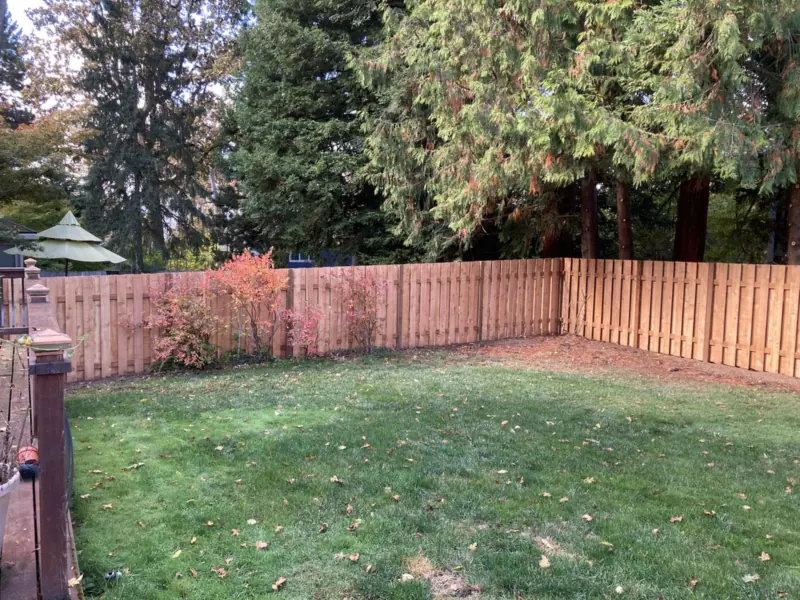
The work, in detail.
-
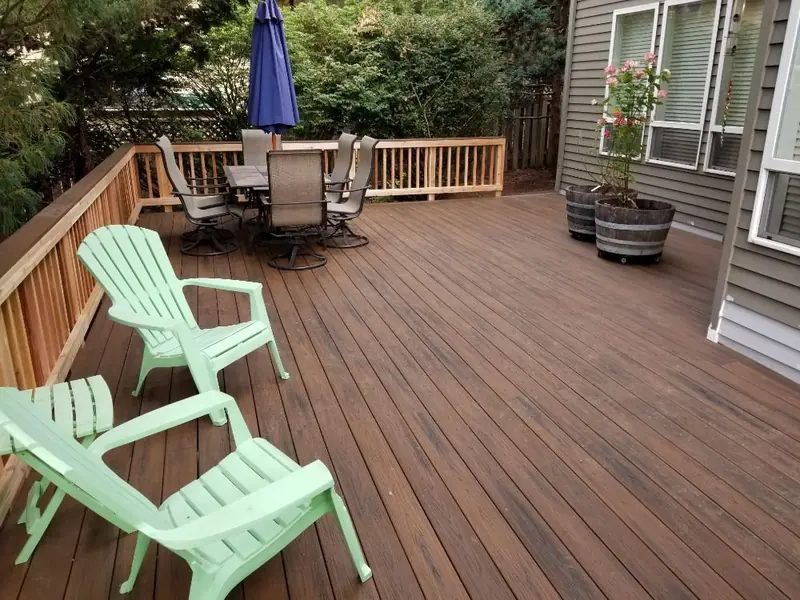
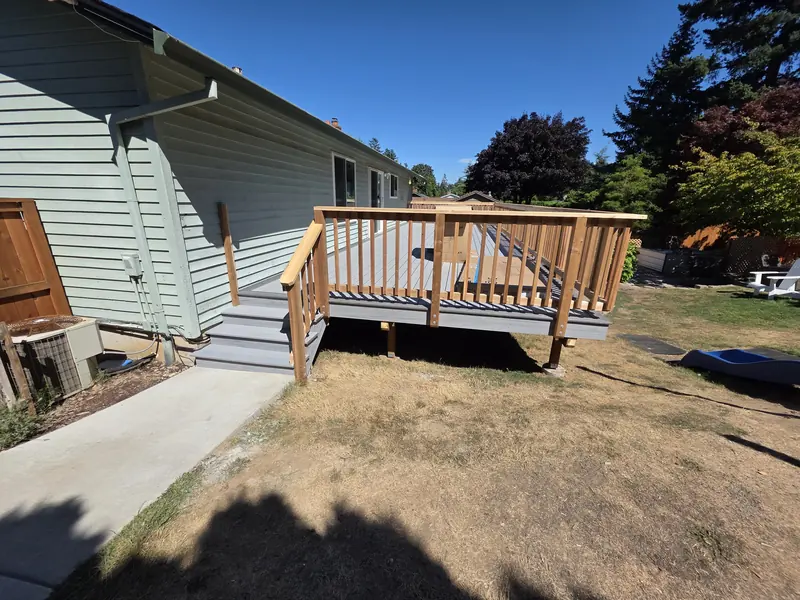
Deck surfaces, stairs and railings cleaned, brightened and stained so the boards shed water instead of absorbing it.
Our work · Low deck with steps
-
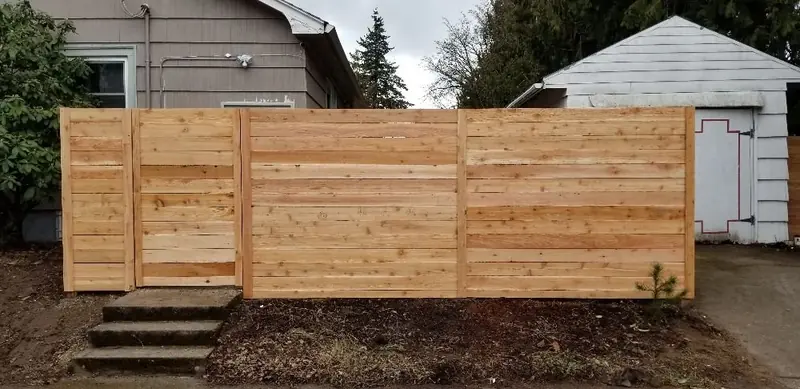
One or both sides of cedar or pressure-treated fences stained, including posts, rails, caps and gates.
Our work · Horizontal cedar fence
-
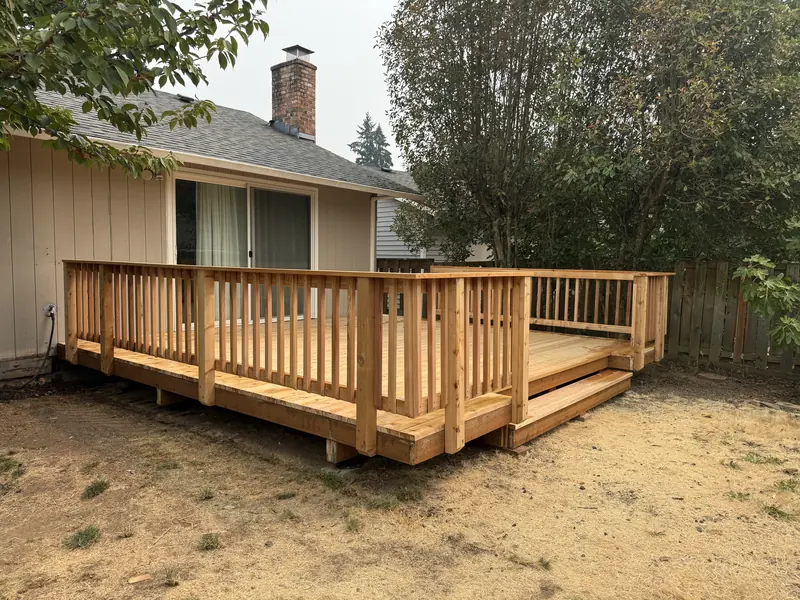
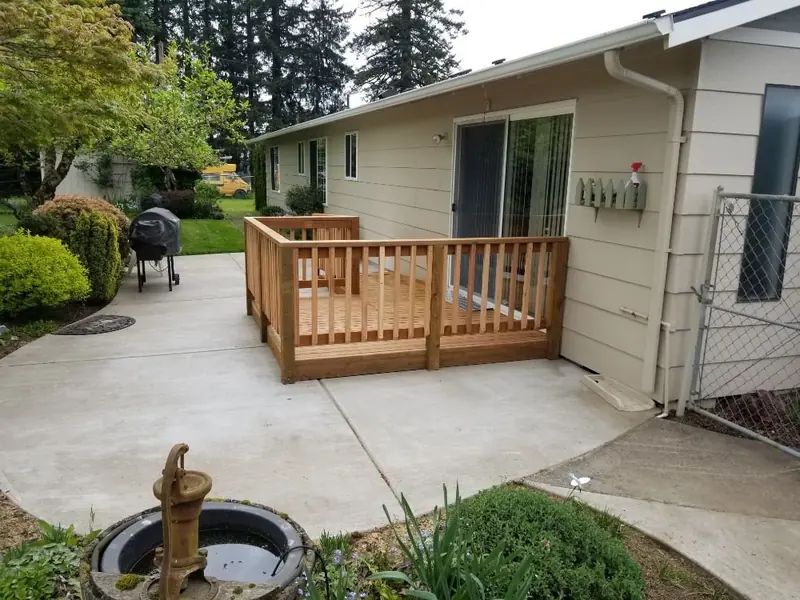
Removing dirt, mildew and gray weathered fibers, then restoring the natural tone of the wood so stain soaks in evenly.
Our work · Small patio deck
-
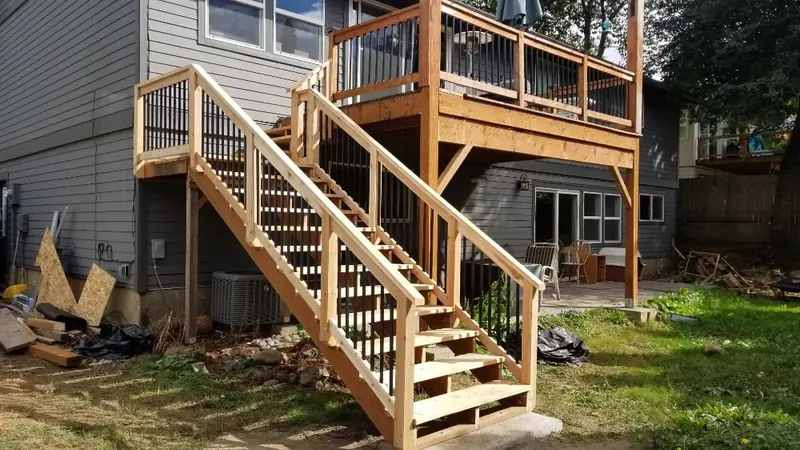
Taking off old peeling or flaking stain so a new coat bonds to the wood rather than to a failing film.
Our work · Two-level deck stair
-
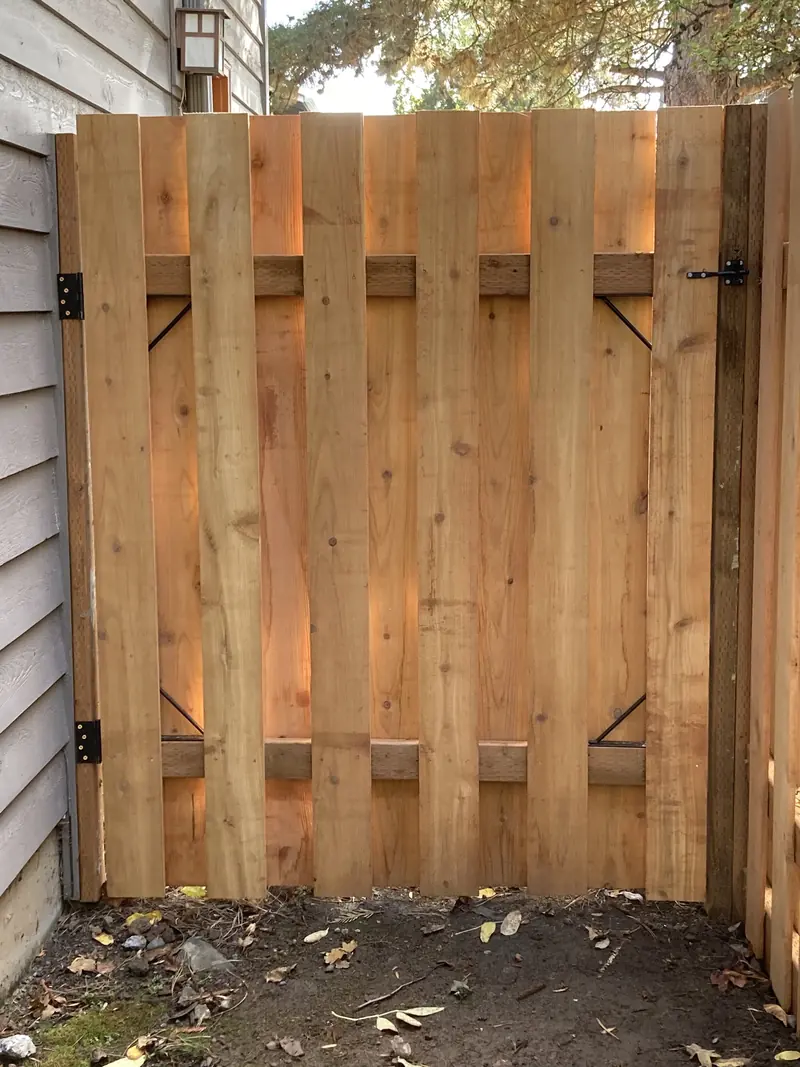
Replacing rotted deck boards, cracked pickets and loose rails before staining, so new color goes onto sound wood.
Our work · Fence with lattice top
-
Overhead structures, arbors and trellises stained by hand, including the hard-to-reach tops of beams and rafters.
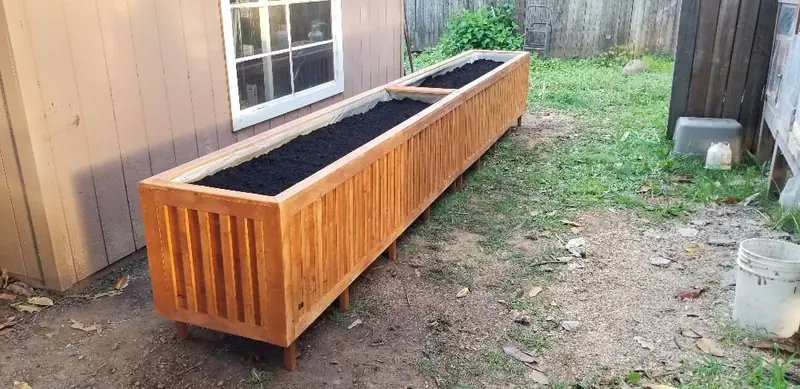
Our work · Cedar raised planter
-
Choosing the opacity that suits the age and condition of the wood, from showing the grain to covering mismatched boards.
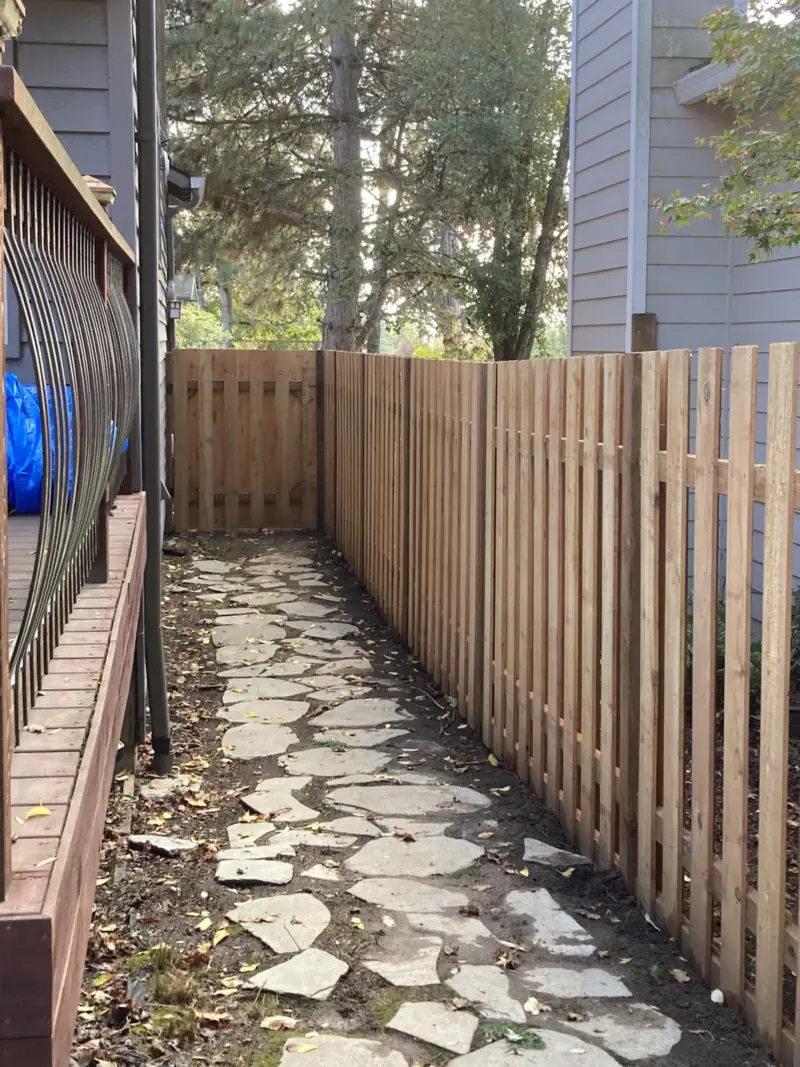
Our work · Side-yard fence
-
Working stain into every board by brush after it is applied, for even penetration and a consistent, lasting finish.
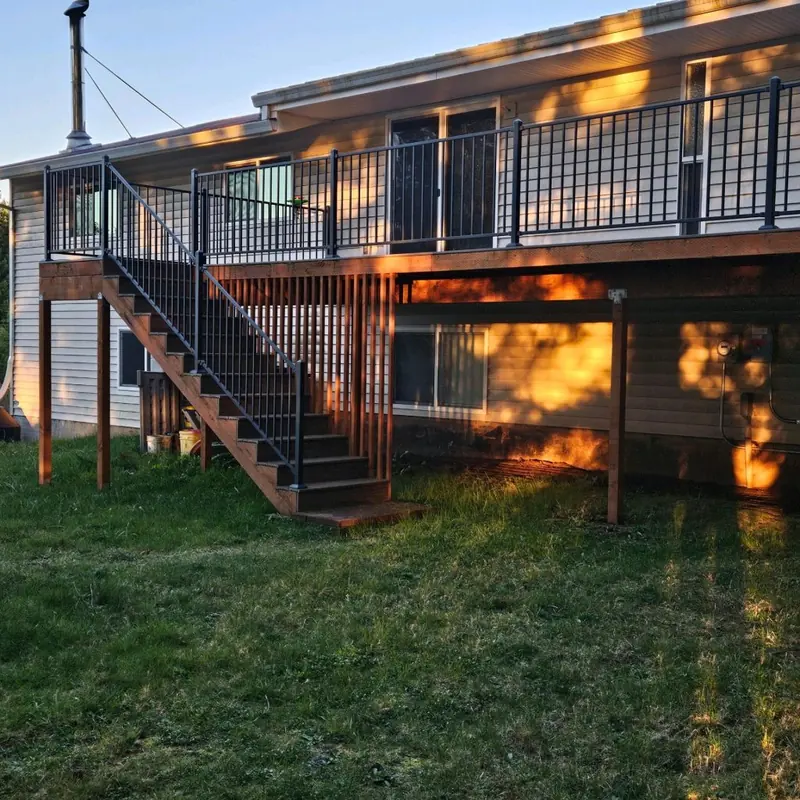
Our work · Upper deck and stair
-
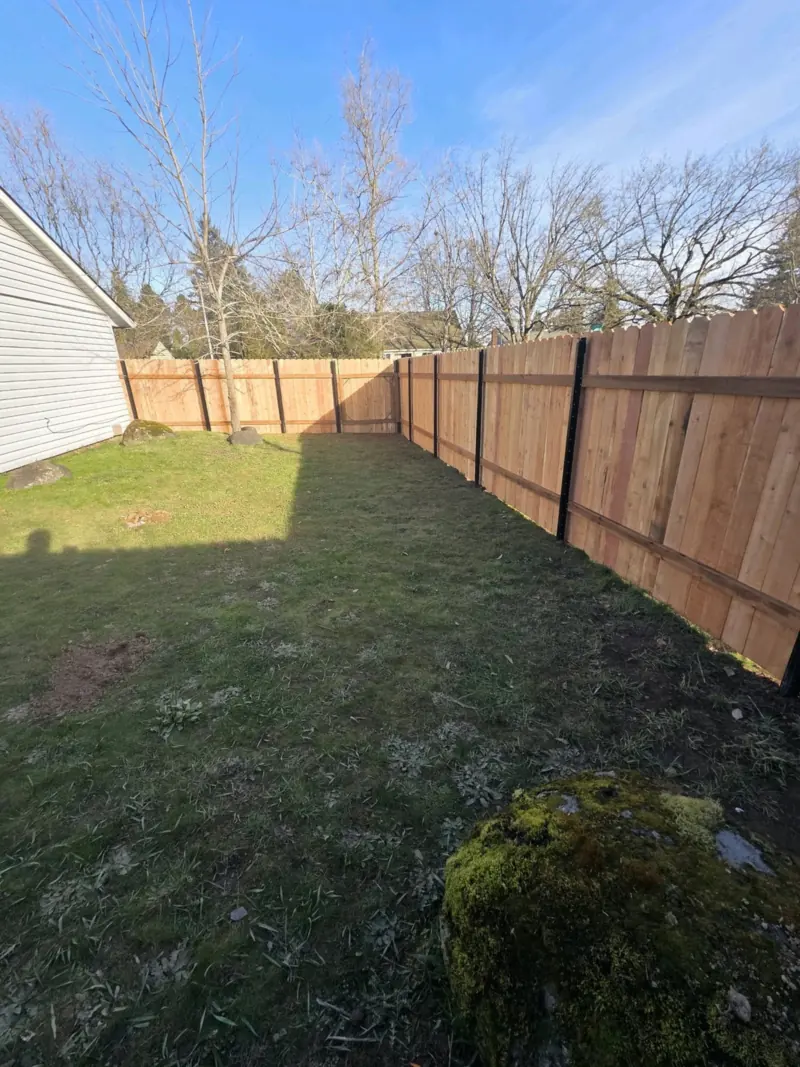
Lighter clean-and-recoat visits on previously stained wood to keep color and protection up before the finish fails.
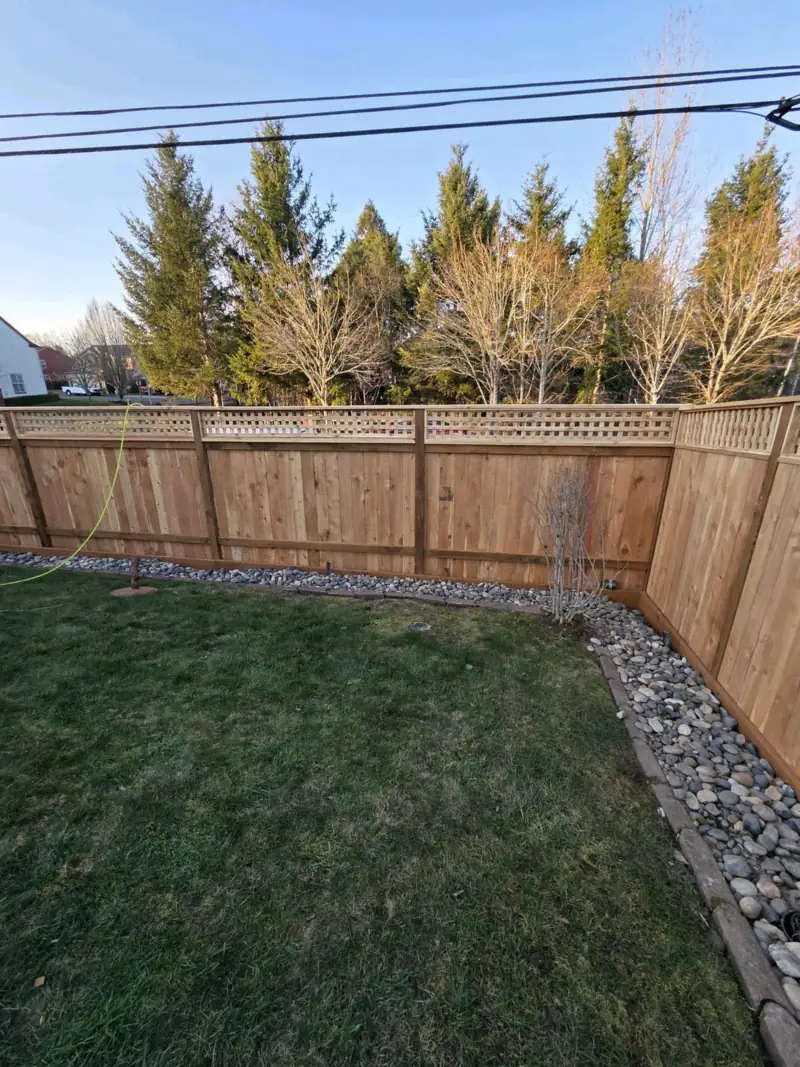
Our work · Cedar fence around lawn
When to call us.
- 01Water soaks into the boards instead of beading on the surface.
- 02The wood has turned gray or silver and feels rough or fuzzy.
- 03Old stain is peeling, flaking or worn through on the stairs.
- 04Moss, algae or black mildew spots are spreading across the boards.
- 05Cracks and checks are opening up along the grain.
- 06A newer fence or deck has had time to dry out and has never been stained.
Four steps, no surprises.
- 1
Free staining estimate
We check the wood, the old finish and any repairs needed, and help you pick a stain color and opacity.
- 2
Repair & clean
Boards are fixed or replaced, then the wood is cleaned, stripped where needed and brightened.
- 3
Dry, then stain
Once the wood has fully dried we apply stain and back-brush it into every board, rail and post.
- 4
Cure & walkthrough
We remove masking, clean up and walk the finished deck or fence with you before handing it back.
Why it matters here.
Few climates test exterior wood like the Portland area.
Months of rain keep decks and fences damp, Douglas firs and big-leaf maples drop needles and leaves that hold moisture against the boards, and moss moves in on any shaded surface. Then July and August bake the same wood dry and gray. Fences in Gresham and Troutdale also catch the east wind, which drives rain into the grain. Stain applied in the dry months, to clean and dry wood, is one of the best things a homeowner can do to make outdoor wood last.
In their words.
We just had part of our fence and gate replaced and it looks awesome now. Shawn came out and went over every detail with us before they started the work. We had some concerns which he listened to and offered solutions. The workmanship is excellent and the quality was even better! Thank you Shawn, Marty and Rob!
Shawn did a fantastic job on our fence projects. He was professional and patient as we worked through our plan, and then he and his crew executed smoothly and on schedule. Highly recommend!
We have used Triple S Construction on multiple jobs at both our houses from drywall, kitchen cabinets, decks and more. The work is always first rate at a reasonable price. Shawn is very responsive to questions and gets projects done on time.
Asked & answered.
Don’t see yours? Call (503) 781-2093.
How often should I stain my deck in Oregon?
It depends on the stain type, how much sun and rain the deck gets, and how much foot traffic it sees. Horizontal deck surfaces wear much faster than fences or railings. The simplest test is water: if it soaks in instead of beading up, the wood is due. We can check yours at a free estimate.
What is the best stain for a fence in the Pacific Northwest?
A quality penetrating stain suited to the wood and the look you want. Semi-transparent stains show the grain and are easier to maintain; solid stains hide mismatched or weathered boards but behave more like paint over time. We recommend a product and opacity after looking at the wood and how exposed it is.
When is the best time to stain a deck?
In the drier months, typically late spring through early fall, after a stretch of dry weather. The wood needs to be clean and dry, and the stain needs mild temperatures and no rain while it soaks in and cures. We schedule staining around the forecast and will move a date rather than stain damp wood.
Should I stain or seal a new fence?
New pressure-treated or cedar fences usually benefit from staining once the wood has had time to dry out after installation; the right wait depends on the lumber and the season. A penetrating stain with some pigment protects against both water and sun better than a clear sealer alone. We can tell you when your fence is ready.
Do you repair boards before staining?
Yes. We replace rotted or split deck boards, loose pickets, cracked rails and wobbly stair treads before staining, so the new finish goes onto sound wood. Deck and fence repair is one of our own services, so the repairs and the staining are handled together under one estimate.
While we’re there.
Deck & Fence Repair
Decks and fences take more weather than anything else you own outdoors.
See deck & fence repair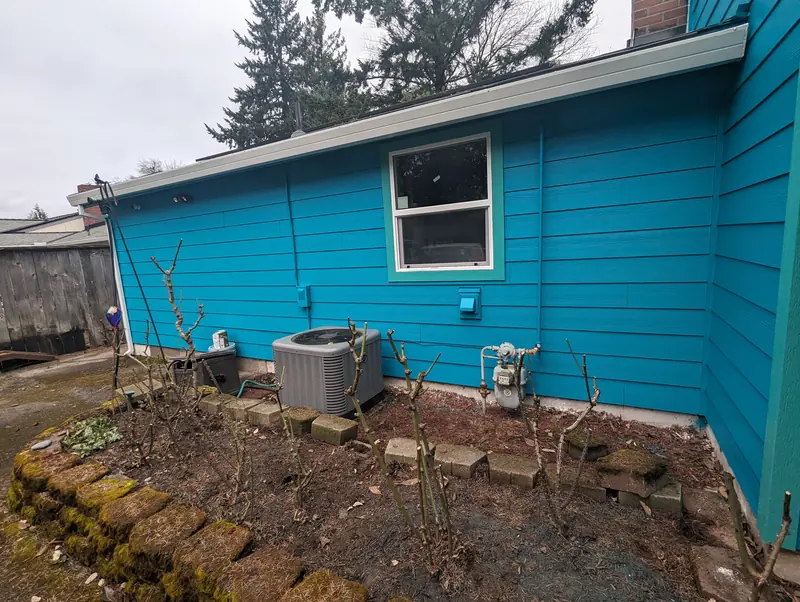
Exterior Painting
Exterior paint in western Oregon is a protective coating first and a color second.
See exterior painting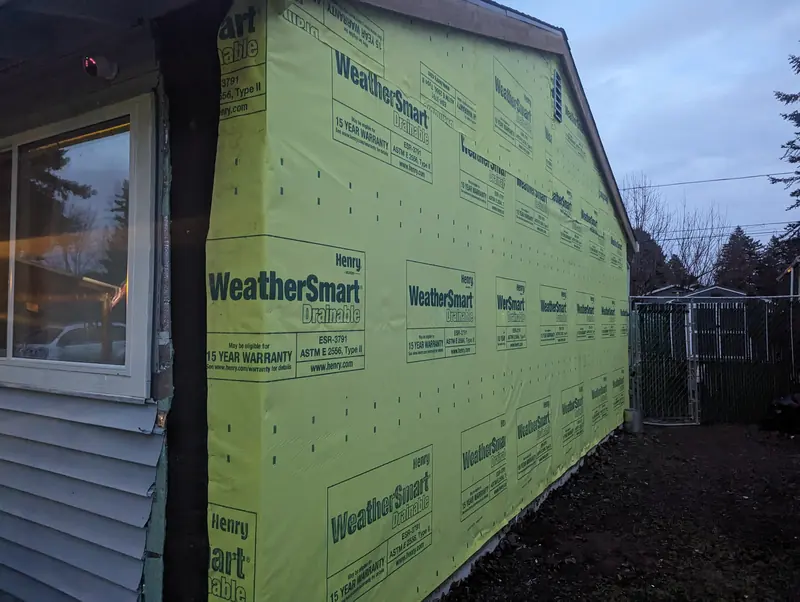
Dry Rot Repair
In a climate this wet, rot is not a question of if but where.
See dry rot repairTell us about your house.
Send a few lines about the job and the best way to reach you. Shawn reads every message himself and calls back fast, usually the same day.
- Call or text, 24/7(503) 781-2093
- Emailshawnpherbst@gmail.com
- Oregon CCB#215023 · licensed & insured